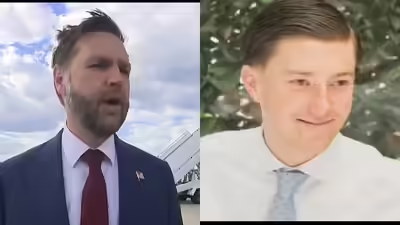
In a significant legal development, South African opposition leader Julius Malema has been sentenced to five years in prison following a conviction related to the unlawful discharge of a firearm. The ruling, delivered by a regional court in Johannesburg, marks one of the most serious legal challenges faced by the prominent political figure in recent years.
Court Ruling and Charges
The case stems from a 2018 incident in which Mr. Malema was filmed discharging what prosecutors identified as an automatic rifle during a public event. The footage, widely circulated on social media at the time, became central evidence in the prosecution’s case. Authorities argued that the act violated South Africa’s strict firearm regulations under the Firearms Control Act.
The court found that Mr. Malema’s actions constituted illegal possession and reckless discharge of a firearm, both serious offenses under South African law. In delivering the judgment, the presiding judge emphasized the importance of adherence to firearm legislation, particularly by public figures.
Political Implications for South Africa
Mr. Malema is the leader of the Economic Freedom Fighters (EFF), a major opposition party known for its radical economic policies and strong youth support base. His sentencing is expected to have immediate political ramifications, potentially affecting party leadership dynamics and upcoming electoral strategies.
The EFF has previously defended its leader, arguing that the case was politically motivated. However, no official statement confirming such claims has been substantiated by independent legal authorities.
Legal Response and Appeal Prospects
Legal representatives for Mr. Malema have indicated that they intend to appeal the verdict. Under South African law, the filing of an appeal could delay the enforcement of the prison sentence pending judicial review.
Experts in South African constitutional law note that appeals in such cases often focus on procedural fairness and the interpretation of intent, particularly where public conduct and political symbolism intersect with criminal statutes.
Public and Government Reaction
Reactions across South Africa have been mixed. Supporters of Mr. Malema have expressed concern over what they perceive as selective enforcement of the law, while others have welcomed the ruling as a demonstration of judicial independence.
Government officials have not issued a detailed response, but legal analysts suggest the case underscores the judiciary’s willingness to hold high-profile figures accountable regardless of political standing.
Broader Context: Firearm Laws in South Africa
South Africa maintains some of the strictest firearm regulations on the continent, aimed at curbing gun violence. The Firearms Control Act requires licenses for possession and strictly regulates the use of automatic weapons.
The conviction of a high-profile political leader under these laws may reinforce the government’s broader messaging on compliance and public safety.
What Remains Unclear
As of now, it has not been officially confirmed when Mr. Malema will begin serving his sentence, pending the outcome of any appeal. Additionally, details regarding potential political succession within the EFF remain undisclosed.
The Vagabond News Perspective
The sentencing of Julius Malema represents a defining moment in South Africa’s legal and political landscape, raising critical questions about accountability, political influence, and the enforcement of firearm laws. While the legal process continues, the case is likely to resonate across both judicial and electoral arenas.
Sources:
Reuters, BBC News, Al Jazeera, South African Judiciary Records
Editor: Sudhir Choudhary
Date: April 17, 2026
Tags: South Africa, Julius Malema, EFF, Firearm Law, Politics, Court Verdict
News by The Vagabond News.