San Francisco Mourns Its Beloved Alligator, Claude
📅 January 19, 2026
✍️ Editor: Sudhir Choudhary, The Vagabond News
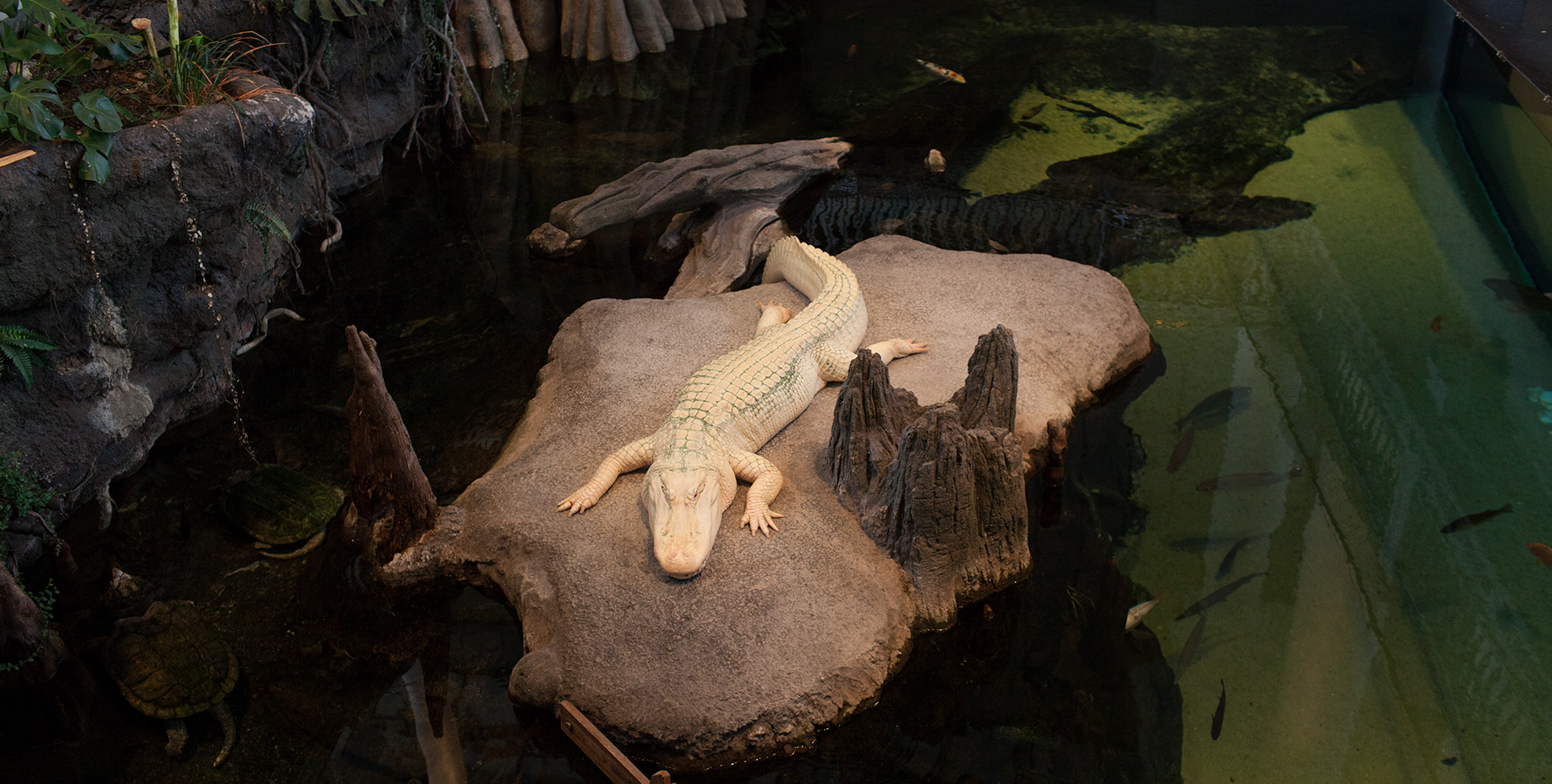


San Francisco is mourning the loss of one of its most unexpected yet beloved residents: Claude, the albino American alligator who lived for decades at the California Academy of Sciences and quietly became a civic icon. Claude’s death has prompted an outpouring of tributes from museum visitors, scientists, educators, and generations of city residents who grew up considering him a permanent fixture of childhood field trips and family outings.
Claude was no ordinary alligator. Rare even among his species, his albinism—characterized by a lack of pigmentation and striking pale skin—made him instantly recognizable. First brought to the Academy as a young alligator in the 1990s, Claude spent more than three decades as one of the institution’s most popular exhibits, drawing millions of visitors and serving as an entry point for public education about reptiles, conservation, and biodiversity.
A Quiet Celebrity in the Heart of the City
In a city known for technological innovation, cultural experimentation, and political activism, Claude occupied a different kind of space. He was not loud, controversial, or fleeting. Instead, he was constant. Schoolchildren pressed their faces against the glass of his enclosure. Tourists paused mid-itinerary to take photographs. Longtime residents returned again and again, comforted by the knowledge that Claude was still there, resting beneath warm lights in his carefully maintained habitat.
For many San Franciscans, Claude became a symbol of continuity in a city defined by rapid change. As neighborhoods transformed and institutions evolved, Claude remained unchanged—slow-moving, inscrutable, and enduring.
Educational Impact Beyond the Exhibit
According to the Academy, Claude played a significant role in advancing public understanding of reptilian biology and conservation. Educators routinely used his exhibit to discuss topics ranging from wetland ecosystems and climate sensitivity to the genetic factors behind albinism. Unlike many animals whose presence in museums is fleeting, Claude’s longevity allowed educators to build long-term programs around his life and behavior.
Academy staff emphasized that Claude received specialized care throughout his life. Albino alligators are particularly sensitive to light and environmental changes, requiring careful habitat control. Claude’s enclosure was designed to replicate the warmth and humidity of the American Southeast while protecting him from excessive exposure that could compromise his health.
Public Reaction and Tributes
News of Claude’s death spread quickly across social media and local community forums. Residents shared photos spanning decades, from grainy childhood snapshots to recent smartphone images. Former students recalled their first encounters with him as formative moments that sparked lifelong interests in biology and environmental science.
Local artists posted sketches and illustrations in his memory. Parents described explaining Claude’s passing to young children as their first lesson in loss tied to a public institution. Even those who had not visited the Academy in years expressed a sense of personal loss.
An Institution Responds
The California Academy of Sciences confirmed that Claude passed away due to age-related health complications, noting that his lifespan exceeded that of many alligators in human care. The institution plans to honor Claude’s legacy through educational programming and archival exhibits highlighting his role in the Academy’s history.
Officials have not announced whether another alligator will eventually inhabit the space Claude occupied. For now, they say, the focus remains on remembrance rather than replacement.
More Than an Alligator
Claude’s significance extended beyond biology. In a subtle way, he became part of San Francisco’s cultural fabric—proof that civic identity can be shaped not only by people and landmarks, but also by the quiet presence of a living creature who asked for nothing and gave wonder in return.
As the city reflects on Claude’s passing, one sentiment dominates: gratitude. Gratitude for decades of shared moments, for lessons learned without words, and for the rare experience of watching the same animal grow old alongside a changing city.
Claude may have been an alligator, but to San Francisco, he was family.
Source: California Academy of Sciences
Tags: San Francisco, California Academy of Sciences, Wildlife, Conservation, City Culture, Public Memory
News by The Vagabond News