

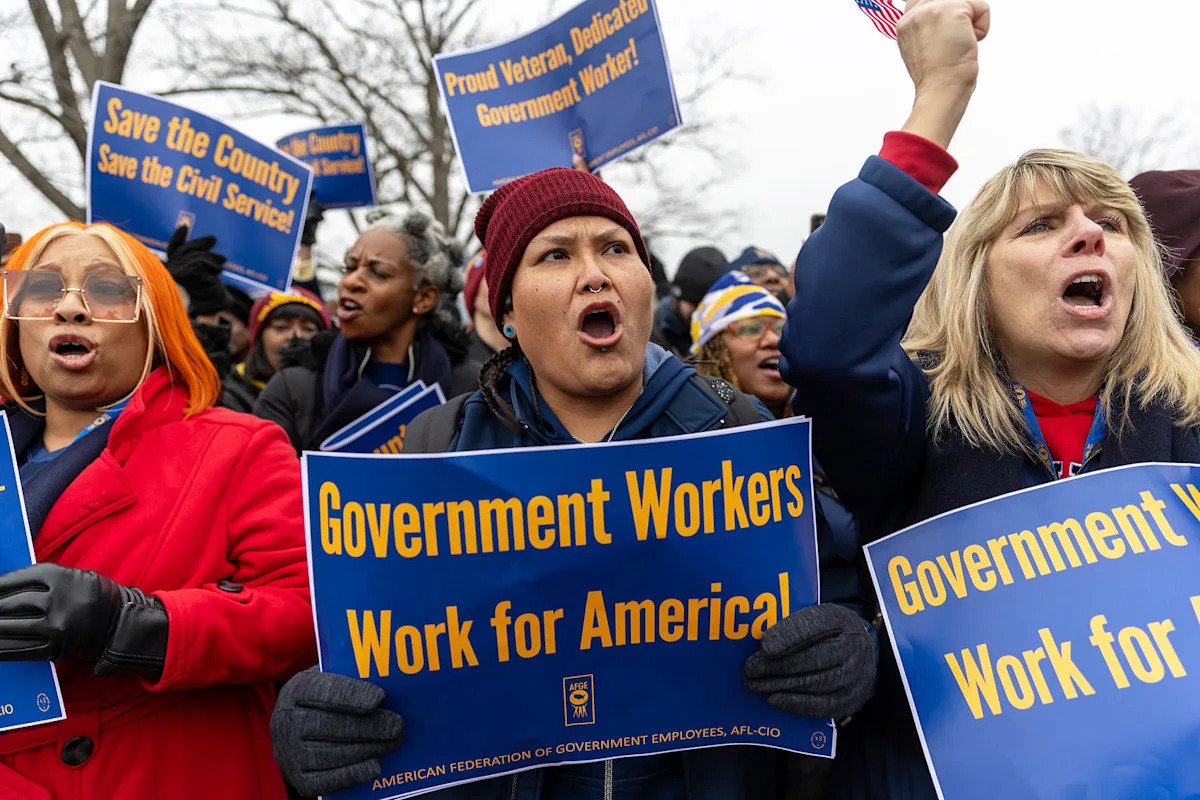
Senate GOP Cites Federal Workers’ Union in Push for Funding Extension; Democrats Hold Line
(Washington | October 29, 2025) — Senate Republicans pointed to a public call by the American Federation of Government Employees (AFGE) urging passage of a stopgap funding bill to avert a shutdown, hoping to pressure Democrats in ongoing budget talks. The appeal did not immediately shift Democrats’ position, and there was no sign of a breakthrough by late Wednesday.
Background
AFGE, the largest union representing U.S. federal workers, has consistently urged Congress to avoid lapses in appropriations, warning that shutdowns disrupt services and strain government operations. Continuing resolutions (CRs) — short-term funding extensions — have become routine in recent years as partisan disputes delayed full-year spending bills.
The broader context includes repeated episodes of brinkmanship since 2011 that have drawn warnings from credit rating agencies about U.S. fiscal governance. Fitch cited “erosion of governance” in its 2023 U.S. downgrade, while Moody’s shifted its outlook on the United States to negative later that year. Shutdown threats have repeatedly forced agencies to prepare contingency plans affecting pay, contracting and public-facing services.
Developing Situation
Republican senators this week referenced AFGE’s call for a funding extension as a reason to approve a short-term CR to keep agencies operating while negotiations continue on longer-term appropriations. Democratic leaders, however, reiterated their existing stance and did not indicate any change in strategy in response to the GOP appeals.
While staff-level talks continued, no agreement was announced as of Wednesday evening. Agencies and contractors typically begin planning for potential disruptions when funding deadlines approach, and unions often amplify calls for continuity to protect paychecks and services.
Global Reactions
Internationally, shutdown risks are primarily viewed through the lens of U.S. fiscal credibility and market stability. Previous standoffs have prompted reminders from analysts and ratings firms that repeated near-shutdowns can weigh on perceptions of U.S. governance. Investors generally monitor Treasury markets, the U.S. dollar and short-term funding conditions for signs of stress, though day-to-day movements are influenced by multiple factors beyond budget talks.
There were no immediate formal reactions from foreign governments on the latest Capitol Hill maneuvering. Multinational businesses with U.S. federal contracts typically track agency guidance on potential delays if funding lapses.
Analysis / Outlook
Union endorsements of a stopgap can offer political cover for moderates, but they rarely reset leadership negotiating positions on Capitol Hill. If talks remain stalled, lawmakers often revert to a short-term CR to buy time, a step that averts immediate disruptions but leaves underlying disputes unresolved.
The practical stakes include continuity of federal pay, contracting schedules and program administration. A timely extension would maintain services while appropriations are finalized; failure to act could trigger partial shutdown procedures, which historically increase costs and reduce efficiency. The union’s intervention underscores workforce concerns, but the path forward will depend on party leaders agreeing on the duration and terms of any funding bridge.
— The Vagabond News
Sources: Reuters, BBC, AP, AFP


