


Kerala Ambulance Delay: Shocking, Tragic Loss of Tribal Kids
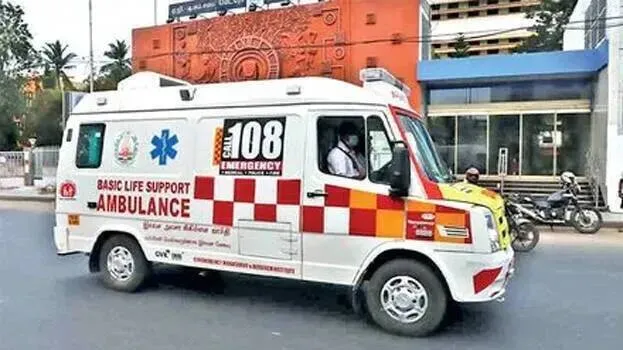
Two tribal children in Kerala have died after a sunshade collapsed on them, a catastrophe compounded—according to their grieving mother—by a critical delay in getting an ambulance. In her words, one of her children might have survived if help had arrived sooner. The incident has sparked renewed scrutiny of emergency response systems in remote and marginalized communities and intensified the public conversation around Kerala Ambulance Delay, equity in healthcare access, and the urgent need for reliable services in hard-to-reach areas.
What we know so far
– A sunshade collapsed, fatally injuring two tribal children.
– Family members and neighbors rushed to help as they waited for emergency services.
– The children’s mother alleges that the ambulance took too long to arrive, and that timely intervention could have saved at least one life.
– Community members have echoed frustrations commonly heard in remote settlements: poor road connectivity, patchy mobile networks, and logistical hurdles for ambulances navigating rugged terrain.
While the exact minute-by-minute timeline remains to be formally established, the mother’s allegation raises pointed questions about emergency readiness in tribal belts and whether protocols for rapid dispatch were followed.
Why Kerala Ambulance Delay matters
Kerala’s 108 emergency response system is widely regarded as one of the more organized frameworks in India, yet outcomes can vary significantly depending on geography and infrastructure. In tribal regions—often separated from district centers by forest roads, steep inclines, and seasonal hazards—ambulances can face delays due to:
– Distance to the nearest station or hospital
– Roads that are narrow, damaged, or unpaved
– Limited GPS accuracy and mobile signal drop-offs
– Night-time navigation challenges and weather disruptions
When a call involves children with head or crush injuries, every minute can be decisive. Kerala Ambulance Delay, whether a result of systemic constraints or procedural lapses, is not just a service hiccup—it can be a matter of life and death.
A mother’s allegation, a community’s grief
The mother’s account is stark: a preventable loss compounded by late medical attention. Community voices gathered at the scene, according to local accounts, described frantic efforts to arrange transport and contact emergency services. In several tribal hamlets across Kerala, families still rely on community vehicles or motorcycles for emergency transport—stopgap measures that reflect resilience but also point to gaps in public provision. In this case, the allegation is simple yet devastating: had an ambulance reached the site sooner, one child might be alive today.
Systemic gaps behind a single tragedy
This tragedy is not a statistical anomaly but a signal. Even a well-intentioned system can fail if last-mile logistics are weak. Key friction points include:
– Dispatch and triage: How quickly and accurately are calls assessed and prioritized for trauma cases?
– Asset availability: Were ambulances and trained paramedics within a reachable radius? Was intensive pre-hospital care available?
– Route intelligence: Do dispatchers have live information on road closures, landslides, or safer alternative routes?
– First responder training: Are local volunteers or health workers in tribal hamlets equipped to stabilize patients until transport arrives?
– Coordination with hospitals: Were receiving facilities alerted, and was golden-hour care realistically attainable?
What officials and agencies must clarify
To restore public trust, transparent answers are needed:
– The exact call time, dispatch time, wheels-rolling time, and arrival time
– The distance and driving conditions between the ambulance base and the incident site
– The level of care provided en route and whether advanced life support was available
– Any equipment or staffing shortages on the day
– Contingency plans for tribal areas, including four-wheel-drive ambulances, bike ambulances, or satellite emergency units
Immediate steps that could save lives
– Dedicated tribal-area ambulance units with off-road capability and GPS beacons
– Community first responder networks trained in basic trauma care and bleeding control
– Pre-mapped emergency routes with seasonal updates and signage
– Signal-boosting solutions in mobile dead zones, including satellite-enabled alert devices for health workers
– Real-time dispatch dashboards and public reporting of response-time metrics
– Periodic stress tests and audits focused on the most remote settlements
A call for accountability—and action
The deaths of two tribal children following a sunshade collapse should trigger more than condolences. It should result in an independent timeline audit, public disclosure of response metrics, and concrete upgrades tailored to tribal regions. If the mother’s claim is validated, it will underline the unbearable cost of Kerala Ambulance Delay and the immediacy with which the state and its partners must act.
For families in remote hamlets, the promise of emergency care must be more than a number to dial. It must be a guarantee that the system will find them—fast, prepared, and equipped to save a life. The measure of Kerala’s healthcare commitment, especially in its tribal belts, is not merely the number of ambulances on paper but how swiftly a team arrives when a child is fighting for breath.
This is a moment to tighten the chain of survival—call intake, dispatch, response, stabilization, transport, and definitive care—so the next family in crisis isn’t left counting minutes. The tragedy underscores a clear truth: in life-threatening emergencies, there can be no Kerala Ambulance Delay.
News by The Vagabond News


