


📅 January 20, 2026
✍️ Editor: Sudhir Choudhary, The Vagabond News
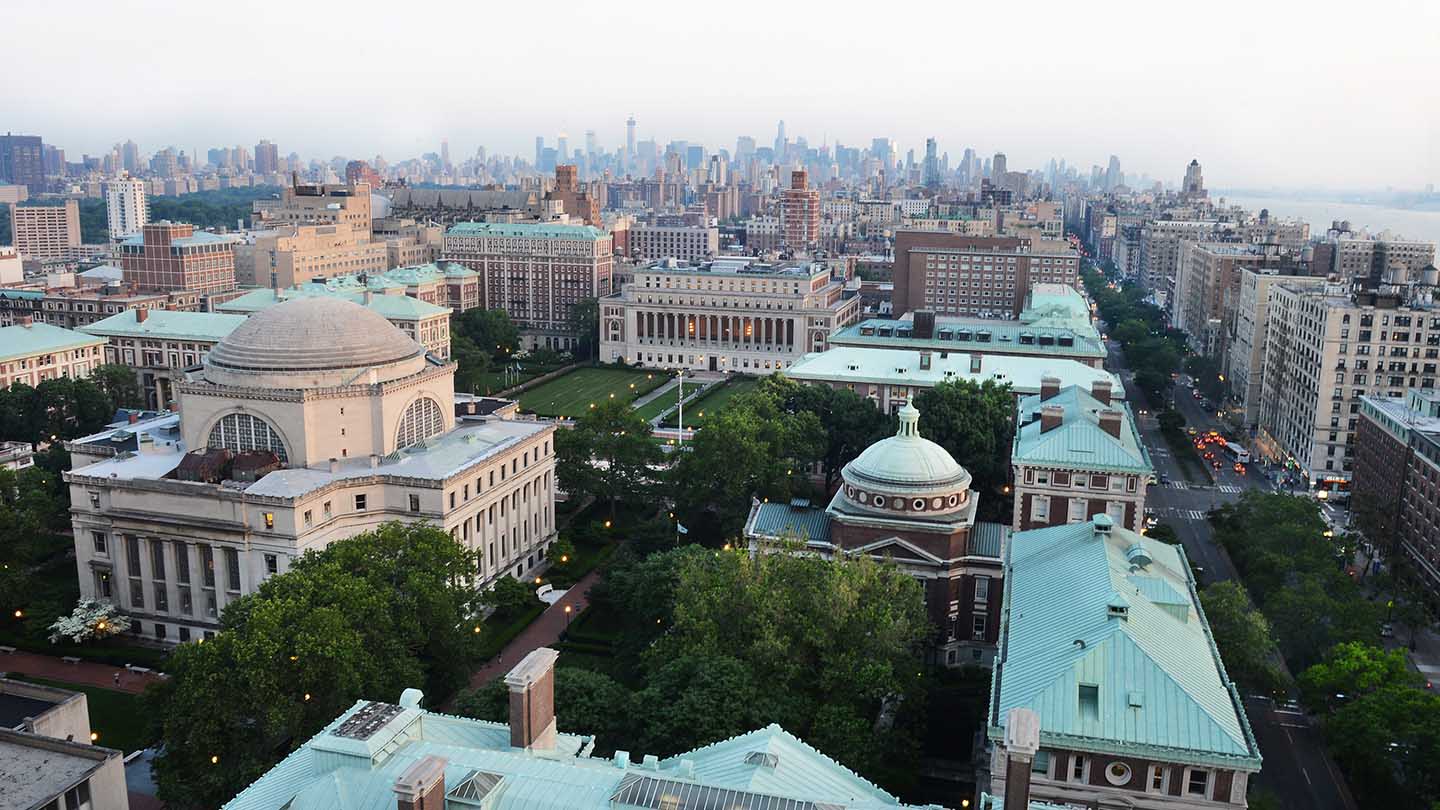


In a city known for its protest traditions and outspoken opposition to conservative politics, Columbia University stands out for what it is not: a hotbed of disruptive, sustained student unrest. Even as New York remains one of the most openly anti-Trump political environments in the United States, protest culture at the Ivy League campus has remained comparatively restrained, episodic, and tightly managed.
This contrast has become more noticeable amid a renewed wave of demonstrations across U.S. universities tied to immigration enforcement, Middle East policy, climate activism, and the second-term agenda of President Donald Trump. While campuses in other cities have seen prolonged encampments, building takeovers, or repeated clashes with police, Columbia’s activism has largely followed predictable patterns: permitted rallies, short-lived sit-ins, and carefully negotiated actions that rarely spiral out of institutional control.
A Campus With a Radical Past
Columbia’s relative calm is striking given its history. The university was a national epicenter of student revolt in 1968, when antiwar and civil rights protests shut down the campus and left a lasting imprint on American political culture. That legacy still looms large in the school’s mythology—and in the expectations of outsiders who assume Columbia remains perpetually rebellious.
Yet today’s reality is different. Protests do occur, often drawing hundreds of students and faculty, but they tend to be time-limited and symbolic rather than confrontational. Administrators typically engage quickly with organizers, setting boundaries that channel dissent into structured forums.
“Columbia students are politically engaged, but they’re also strategic,” said a faculty member who has observed campus activism for more than a decade. “There’s a strong preference for visibility without chaos.”
New York’s Protest Energy—Filtered
That restraint is notable given Columbia’s location in Manhattan’s Upper West Side, a neighborhood steeped in progressive politics and within walking distance of major media outlets, advocacy groups, and protest infrastructure. In the broader city, demonstrations against President Donald Trump’s policies have routinely drawn tens of thousands, shutting down streets and dominating headlines.
On campus, however, the tone is more subdued. Student groups often emphasize messaging, social media campaigns, and formal demands over mass disruption. Protest organizers say this reflects both institutional pressure and student calculation.
“There’s an understanding that if things get out of hand, the university will respond swiftly—and not in our favor,” said one student activist involved in immigration-related protests.
Administration, Rules, and Risk
University policies play a significant role. Columbia enforces strict rules governing protests, including limits on building access, overnight demonstrations, and amplified sound. Violations can trigger disciplinary action, a deterrent in a highly competitive academic environment where students are acutely aware of reputational and career consequences.
Administrators argue that the approach protects academic continuity and campus safety while preserving space for free expression. Critics counter that the framework effectively neutralizes protest before it can generate sustained pressure.
“Columbia allows protest, but not disruption,” said a civil liberties advocate familiar with campus cases. “That distinction matters.”
A Different Student Calculus
Another factor is student demographics. Columbia’s student body includes a large number of international students and those pursuing careers in finance, law, medicine, and technology—fields where activism perceived as extreme can be seen as a liability.
That does not mean students are disengaged. Surveys and turnout at rallies suggest strong progressive sentiment. But activism is often calibrated to avoid personal risk.
“In New York, you can protest anywhere,” said a graduate student. “At Columbia, you choose when and how very carefully.”
Comparisons With Other Campuses
Compared with universities in the Midwest, West Coast, or even parts of the Northeast, Columbia’s protest culture appears disciplined to the point of caution. Analysts say that makes the campus less volatile—but also less influential in shaping national protest movements.
Historically, sustained campus unrest has often required prolonged disruption to force concessions or national attention. Columbia’s model, by contrast, favors negotiation over escalation.
A Mirror of Liberal New York?
In some ways, Columbia reflects broader liberal New York politics: deeply critical of President Donald Trump, vocal in rhetoric, but institutionally stable and resistant to disorder. Protest exists—but within guardrails.
As national polarization intensifies, that balance may be tested. For now, Columbia remains an anomaly: a campus surrounded by protest energy, yet largely insulated from its most combustible forms.
Whether that restraint represents maturity—or missed opportunity—depends on whom you ask.
Source: Campus interviews; university policy documents; student group statements
Tags: Columbia University, New York, student protests, campus politics, Trump administration, higher education
News by The Vagabond News


