

Why the Epstein Investigations Took So Long and Did So Little
Editor: Sudhir Choudhary
Date: March 3, 2026

New York / Palm Beach — Years after the death of convicted sex offender Jeffrey Epstein, questions persist about why multiple investigations into his activities stretched across decades yet resulted in limited criminal accountability for him and others in his orbit. Court records, prosecutorial decisions, and law enforcement reviews show a pattern of fragmented cases, legal barriers, and institutional failures that allowed Epstein to avoid sustained federal imprisonment until shortly before his death in 2019.
Epstein was first investigated in the mid-2000s after allegations surfaced in Palm Beach, Florida, that he sexually abused underage girls at his residence. The case eventually led to a controversial 2008 non-prosecution agreement in which federal prosecutors declined broader sex trafficking charges in exchange for Epstein pleading guilty to state-level offenses.
The 2008 Non-Prosecution Agreement
In 2008, federal prosecutors in Florida, led by then-U.S. Attorney Alexander Acosta, approved a non-prosecution agreement that shielded Epstein from federal charges. Instead, Epstein pleaded guilty in state court to solicitation of prostitution and solicitation of a minor. He served 13 months in a county jail facility under a work-release arrangement that allowed him to leave custody during the day.
The agreement also granted immunity to unnamed “potential co-conspirators,” a clause that later drew sharp criticism from victims’ advocates and members of Congress. Court filings revealed that many victims were not informed about the deal before it was finalized, raising questions about compliance with the federal Crime Victims’ Rights Act.
Legal analysts have since cited the non-prosecution agreement as a pivotal moment that limited early federal accountability and discouraged further investigation at the time.
Fragmented Jurisdictions and Limited Coordination
Epstein maintained properties in Florida, New York, New Mexico, and the U.S. Virgin Islands, complicating jurisdictional coordination. Law enforcement investigations were conducted by local police departments, federal agencies including the Federal Bureau of Investigation, and U.S. Attorney’s Offices in different districts.
Experts note that multi-jurisdictional investigations require extensive cooperation and evidence sharing. In Epstein’s case, allegations spanned years and multiple states, often involving victims who were minors at the time of alleged offenses. Prosecutors faced challenges in corroborating testimony, preserving evidence, and navigating statutes of limitation.
Civil lawsuits filed over the years referenced activities at several of Epstein’s properties, including his Manhattan townhouse and private Caribbean island. However, civil proceedings do not automatically trigger criminal prosecution, and differing burdens of proof can limit legal outcomes.
The 2019 Federal Charges and Epstein’s Death
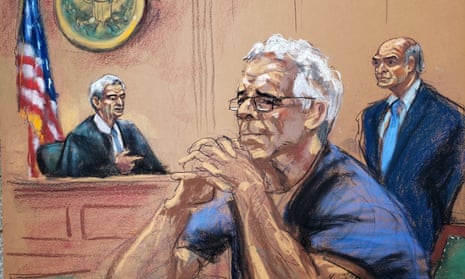
In July 2019, federal prosecutors in the Southern District of New York charged Epstein with sex trafficking of minors, alleging he operated a network that exploited underage girls between 2002 and 2005. He was arrested at Teterboro Airport in New Jersey and detained at the Metropolitan Correctional Center in Manhattan.
On August 10, 2019, Epstein was found dead in his jail cell. The New York City medical examiner ruled the death a suicide. His death terminated the criminal case against him, preventing a full public trial that might have revealed additional evidence or named co-conspirators.
Subsequent investigations into jail supervision failures identified procedural lapses but did not produce charges against prison officials. Epstein’s death intensified scrutiny of the broader system that had failed to secure earlier accountability.
Limited Criminal Accountability Beyond Epstein
Epstein associate Ghislaine Maxwell was later convicted in federal court in 2021 for sex trafficking-related offenses connected to Epstein’s activities. Her conviction marked the most significant criminal outcome stemming from the broader case.
However, no wide-ranging federal indictments were brought against other high-profile associates frequently named in civil filings or media reports. Prosecutors have consistently stated that charging decisions depend on admissible evidence meeting federal standards of proof beyond a reasonable doubt.
Victims’ advocates argue that systemic hesitancy, prosecutorial discretion, and powerful social networks contributed to limited legal consequences during the early years of the investigation.
Institutional Lessons and Ongoing Civil Litigation
In the years since Epstein’s death, multiple civil settlements have resulted in financial compensation for accusers. His estate established a compensation program to resolve claims outside of court.
Legal scholars point to several institutional lessons:
-
The importance of transparency in prosecutorial agreements
-
Strengthened victim notification requirements
-
Enhanced oversight of detention facilities
-
Improved coordination across jurisdictions
Despite these reforms, critics maintain that delayed action and earlier prosecutorial decisions significantly reduced the possibility of broader accountability.
Conclusion
The investigations into Jeffrey Epstein spanned more than a decade, crossed multiple jurisdictions, and involved both state and federal authorities. Yet the most comprehensive federal case ended with his death before trial, limiting public disclosure and accountability. While the conviction of Ghislaine Maxwell represented a measure of justice, many questions remain about why earlier investigations resulted in minimal consequences and whether systemic failures allowed misconduct to continue longer than it should have.
The Epstein case continues to serve as a case study in prosecutorial discretion, jurisdictional complexity, and the challenges of pursuing powerful defendants within the U.S. legal system.
Sources:
U.S. District Court filings, Southern District of New York
Palm Beach County court records
Department of Justice Inspector General reports
Trial records in United States v. Ghislaine Maxwell
Tags: Jeffrey Epstein, Criminal Justice, Federal Investigation, Prosecutorial Decisions, Legal Accountability
News by The Vagabond News


