

Editor: Sudhir Choudhary
Date: March 9, 2026
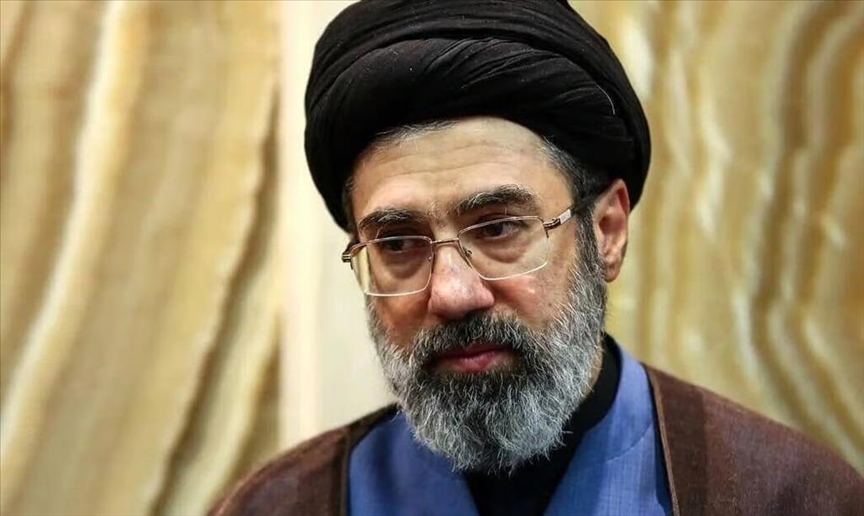
Mojtaba Khamenei Chosen as Iran’s Supreme Leader
Mojtaba Khamenei, a conservative Shiite cleric and the son of the late Iranian leader Ayatollah Ali Khamenei, has been appointed Supreme Leader of Iran following his father’s death in February 2026 during the escalating conflict involving Iran, the United States, and Israel. The decision was made on March 8, 2026, by Iran’s Assembly of Experts, the clerical body responsible for selecting the country’s supreme leader.
The appointment marks only the third person to hold the position since the 1979 Islamic Revolution, and it has drawn international attention because it represents the first time leadership in Iran has effectively passed from father to son, raising questions about dynastic succession in a system originally designed to avoid hereditary rule.
As supreme leader, Mojtaba Khamenei now holds the highest authority in Iran, with control over the armed forces, intelligence agencies, judiciary, and major aspects of foreign and security policy.
Early Life and Religious Background

Mojtaba Khamenei was born in 1969 in Mashhad, Iran, the second son of Ayatollah Ali Khamenei, who ruled Iran from 1989 until his death in 2026.
He studied Islamic theology in the Qom seminary, one of the most influential centers of Shiite religious education in the world. His clerical rank is generally described as hojjatoleslam, a mid-level title below the rank of ayatollah.
Unlike many senior Iranian leaders, Mojtaba Khamenei has never held elected political office or a formal government position. Nevertheless, he has been regarded for years as a powerful figure behind the scenes within Iran’s conservative political establishment.
Influence Behind the Scenes
Although largely absent from public life, Mojtaba Khamenei has long been viewed by analysts as one of the most influential individuals inside Iran’s political system.
He is widely believed to have strong ties to the Islamic Revolutionary Guard Corps (IRGC), the powerful military and political institution that plays a central role in Iran’s security apparatus and regional strategy.
Analysts and former officials have suggested that Mojtaba Khamenei helped coordinate relationships between the clerical leadership and the Revolutionary Guards, particularly during periods of domestic unrest and political tension.
He has also been linked by critics to the government’s response to the 2009 Green Movement protests, although Iranian authorities have never publicly confirmed those allegations.
Controversial Succession
The selection of Mojtaba Khamenei has sparked debate inside and outside Iran because it resembles a hereditary transition, something the Islamic Republic historically opposed after overthrowing the monarchy in 1979.
Under Iran’s constitution, the Assembly of Experts chooses the supreme leader based on religious scholarship and political leadership rather than family ties. However, Mojtaba Khamenei’s close relationship with his father and strong backing from conservative institutions helped position him as a leading candidate.
Some clerics and analysts have questioned whether his religious rank and lack of public leadership experience meet the traditional expectations for the role.
Despite these concerns, Iran’s political and military establishment quickly expressed support for the decision, emphasizing the need for continuity during wartime conditions.
Authority of the Supreme Leader
The position Mojtaba Khamenei now holds is the most powerful office in Iran. According to Iran’s constitution, the supreme leader:
- Commands the armed forces and Revolutionary Guards
- Appoints the heads of the judiciary and state broadcasting
- Oversees key elements of foreign policy and national security
- Can influence major decisions across all branches of government
The president of Iran manages day-to-day government administration, but the supreme leader has ultimate authority over the country’s political system.
Leadership During a Time of War
Mojtaba Khamenei assumes power at a moment of intense regional conflict. Iran is currently engaged in escalating hostilities with the United States and Israel following military strikes on Iranian infrastructure and retaliatory missile attacks across the Middle East.
Military analysts say his close ties to the Revolutionary Guards could shape Iran’s strategy during the ongoing conflict, as the organization plays a central role in directing missile and drone operations.
International reactions to his appointment have been mixed. Some governments have criticized the leadership transition, while Iran’s regional allies have welcomed it as a sign of continuity.
A Leader Shaped by Iran’s Power Structure
For decades, Mojtaba Khamenei remained largely in the background of Iranian politics while maintaining strong connections to influential clerics and security officials. His rise to supreme leader now places him at the center of one of the most powerful political systems in the Middle East.
How he navigates the current military crisis and domestic political pressures will likely determine both the future of Iran’s leadership and the direction of its regional policies.
Sources: Reuters; Associated Press; The Guardian; Time; Encyclopaedia Britannica; analyses of Iranian political institutions.
Tags: Mojtaba Khamenei, Iran supreme leader, Iranian politics, Middle East conflict, Islamic Revolutionary Guard Corps
News by The Vagabond News.




Leave a Reply