

By Sudhir Choudhary | March 26, 2026

Landmark Resolution Adopted by the United Nations
The United Nations General Assembly has adopted a resolution formally recognising the enslavement of Africans and the transatlantic slave trade as the “gravest crime against humanity,” in what diplomats describe as a significant symbolic step in acknowledging historical injustice.
The vote took place during a recent session at UN headquarters in New York. According to initial diplomatic briefings, the resolution received broad support among member states. However, detailed voting records, including any abstentions or opposition, have not been fully released at the time of publication.
Officials stated that the resolution reflects a growing international consensus on the scale, brutality, and long-term consequences of the enslavement of Africans over several centuries.
Historical Context and Scale of Enslavement
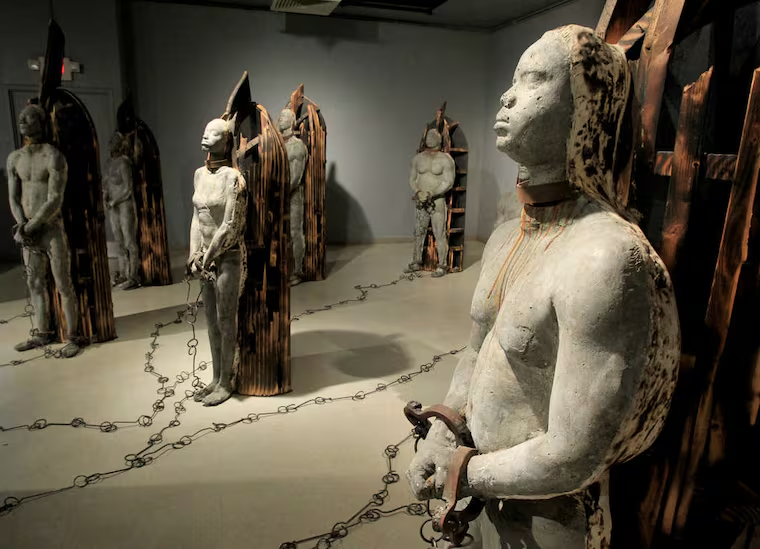
The transatlantic slave trade, spanning from the 16th to the 19th century, forcibly displaced millions of Africans across continents. Historical research estimates that between 12 and 15 million Africans were transported to the Americas, with millions more dying during capture, transit, or enslavement.
Scholars widely describe the system as one of the most extensive and systematic violations of human rights in recorded history. The resolution builds upon earlier United Nations declarations that had already classified slavery and the slave trade as crimes against humanity.
Diplomatic sources indicate that the updated language—describing it as the “gravest” such crime—intensifies the moral and historical framing within international discourse.
Key Elements of the Resolution
While the full official text has not yet been widely published, summaries provided by UN officials and diplomatic representatives indicate several core components of the resolution.
The resolution is understood to:
- Strongly condemn the enslavement of Africans and the transatlantic slave trade
- Recognise the enduring social, economic, and cultural impacts of slavery
- Encourage member states to expand education and public awareness initiatives
- Call for continued international dialogue on historical injustice
UN officials have clarified that the resolution is non-binding and does not impose legal obligations on member states. No provisions regarding reparations or financial compensation have been confirmed in the initial release.
Global Reactions and Ongoing Debate
Initial reactions from member states and advocacy groups have been largely supportive. Several African and Caribbean nations have long called for stronger recognition of slavery’s legacy and have welcomed the resolution’s language.
Human rights organizations have described the move as an important symbolic acknowledgment, though many have reiterated calls for concrete policy actions, including discussions around reparative justice.
At the same time, diplomatic observers note that issues such as reparations remain politically sensitive, with differing views among member states on how such measures should be approached.
No comprehensive official responses from all major global powers were immediately available, and further statements are expected as governments assess the resolution.
Implications for International Policy and Historical Accountability
Experts in international law suggest that while the resolution is not legally binding, it contributes to the evolving framework of global human rights norms. By reinforcing the classification of slavery as a crime against humanity—now described as the gravest—the United Nations strengthens its moral and legal positioning on historical accountability.
The resolution may influence educational frameworks, cultural initiatives, and future diplomatic discussions concerning colonial history and systemic inequality.
However, analysts caution that the practical impact of such measures will depend largely on how individual member states incorporate these principles into national policies.
Conclusion
The United Nations’ decision to recognise the enslavement of Africans as the “gravest crime against humanity” marks a significant milestone in global acknowledgment of historical injustice. While the resolution strengthens international consensus on the severity of slavery, its long-term impact will depend on subsequent actions by member states.
As additional details emerge and diplomatic responses continue, the resolution is expected to shape ongoing global discussions on history, justice, and accountability.
Sources:
- United Nations General Assembly proceedings and official briefings
- Historical research on the transatlantic slave trade
- Commentary from international law and human rights experts
- Diplomatic analysis and early reaction reports
Tags:
United Nations, Slavery, Crime Against Humanity, Human Rights, Global Policy, History
News by The Vagabond News


Leave a Reply