


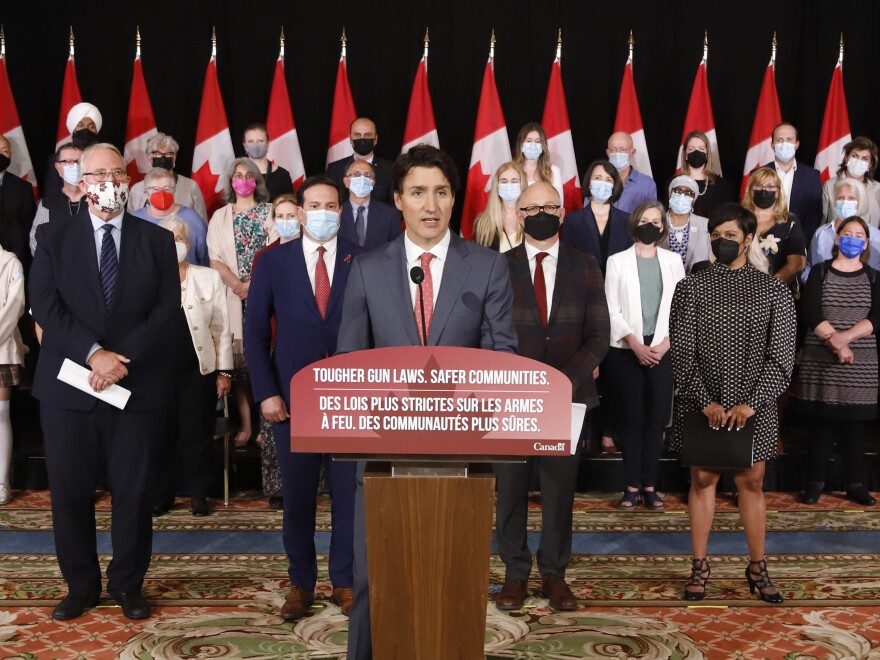

Canada’s most expansive gun control initiative in decades is facing growing criticism from policy experts, law enforcement officials, and community stakeholders, who argue that the measures may not effectively address the country’s primary sources of gun violence.
The policy framework, introduced under Prime Minister Justin Trudeau, includes a sweeping ban on thousands of firearm models, enhanced background checks, and a national buyback program targeting previously legal weapons. While the government has framed the initiative as a critical step toward improving public safety, critics contend that its design may be missing key drivers of gun-related crime.
Focus on Legal Firearms Raises Concerns
One of the central criticisms is that the policy disproportionately targets legally owned firearms rather than addressing illicit weapons trafficking. Analysts note that a significant portion of gun violence in major Canadian cities such as Toronto and Vancouver is linked to smuggled firearms, often originating from outside the country.
Law enforcement agencies have repeatedly highlighted cross-border trafficking as a major challenge, particularly along the Canada–United States border. Critics argue that without stronger enforcement mechanisms targeting illegal supply chains, the current measures risk having limited impact on overall crime rates.
Buyback Program Faces Logistical Hurdles
The federal government’s proposed firearm buyback program has also encountered implementation challenges. Officials have yet to finalize key operational details, including compensation structures, collection logistics, and timelines for compliance.
Firearm owners and advocacy groups have raised concerns about valuation fairness and administrative complexity. Some provinces have expressed reluctance to allocate local law enforcement resources to support the program, further complicating nationwide rollout.
As of now, no comprehensive timeline for full implementation has been officially confirmed, and authorities have acknowledged ongoing consultations with stakeholders.
Urban Violence and Policy Gaps
Experts argue that the initiative does not sufficiently address the socio-economic factors contributing to urban gun violence. Issues such as gang activity, poverty, and systemic inequality continue to play a significant role in firearm-related incidents.
Public safety researchers have suggested that a more holistic approach—combining targeted policing, community investment, and prevention programs—may be necessary to achieve meaningful reductions in violence.
Government officials maintain that the gun control measures are part of a broader strategy, though details on complementary policies remain limited.
Political and Public Response
The policy has sparked a polarized national debate across Canada. Supporters argue that restricting access to certain firearms is a necessary precaution to prevent mass casualty events, while opponents view the measures as ineffective and overly burdensome on law-abiding citizens.
Several provincial leaders have publicly questioned the federal approach, emphasizing the need for region-specific strategies. Meanwhile, public opinion remains divided, with surveys indicating mixed levels of support depending on geographic and demographic factors.
Uncertain Outcomes Ahead
Despite its scale, the long-term effectiveness of Canada’s gun control effort remains uncertain. With implementation still underway and key elements unresolved, policymakers face ongoing pressure to demonstrate measurable results.
Security experts emphasize that without addressing illegal firearms networks and underlying social drivers of violence, the initiative may fall short of its intended goals.
Sources
Reuters, BBC News, The Guardian, Associated Press
Editor: Sudhir Choudhary
Date: April 4, 2026
Tags: Canada, Gun Control, Justin Trudeau, Firearms Policy, Public Safety, Toronto, Vancouver
News by The Vagabond News.


