

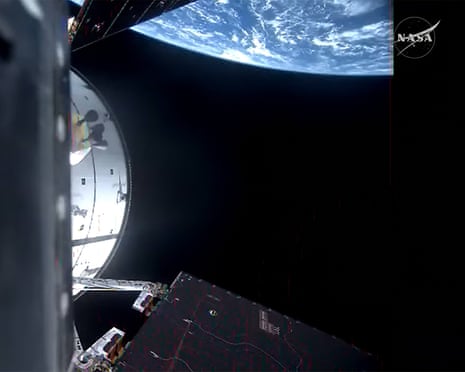

The successful insertion of Artemis II into orbit marks a critical milestone for NASA as it advances its long-term plan to return humans to the Moon. With the spacecraft now safely in orbit, attention turns to the next sequence of mission operations that will determine the success of this historic journey.
Initial Orbital Phase and System Checks
Following launch aboard the Space Launch System (SLS), Artemis II has entered Earth orbit, where astronauts and mission controllers will conduct a series of critical system checks. These include verifying life-support systems, navigation controls, propulsion performance, and onboard communications.
This phase is essential to ensure that the Orion spacecraft is fully operational before committing to deeper space travel. Engineers at mission control are closely monitoring telemetry data to confirm that all systems are functioning within expected parameters.
Translunar Injection: The Journey Toward the Moon
Once initial checks are completed, the spacecraft will perform a key maneuver known as translunar injection (TLI). This controlled engine burn will propel Artemis II out of Earth orbit and onto a trajectory toward the Moon.
The timing and precision of this maneuver are critical. Any deviation could affect the spacecraft’s trajectory and mission timeline. NASA has stated that this phase will be executed only after full confidence in onboard systems is established.
Lunar Flyby Operations
Unlike landing missions, Artemis II will conduct a lunar flyby, carrying astronauts around the Moon before returning to Earth. During this phase, the spacecraft will travel thousands of kilometers beyond the lunar surface, testing deep-space navigation and communication systems.
Astronauts will also evaluate how the spacecraft performs in the harsh conditions of space, including radiation exposure and extended isolation from Earth.
Scientific and Technical Objectives
While Artemis II is primarily a test mission, it will still gather valuable data. The crew will conduct experiments related to human health in deep space, spacecraft performance, and mission operations.
This information will be critical for future missions, particularly Artemis III, which aims to land astronauts on the Moon.
Re-entry and Splashdown
After completing its lunar flyby, Artemis II will begin its return journey to Earth. The spacecraft will re-enter Earth’s atmosphere at high speed, testing the Orion capsule’s heat shield and re-entry systems.
A controlled splashdown in the ocean is planned, where recovery teams will retrieve the crew and spacecraft.
Strategic Importance of Artemis II
NASA officials emphasize that Artemis II is a foundational mission. By validating systems and operations with a human crew, the mission reduces risks for future lunar landings and long-duration space exploration.
The success of this mission is seen as a crucial step toward establishing a sustained human presence on the Moon and eventually enabling missions to Mars.
What Comes Next
If Artemis II proceeds as planned, NASA will move forward with Artemis III, which is expected to include a crewed lunar landing. However, timelines remain dependent on the readiness of supporting technologies, including lunar landers and surface systems.
No official launch date for Artemis III has been confirmed.
Conclusion
With Artemis II now in orbit, the mission enters its most critical phases—from system validation to lunar flyby and safe return. Each step is designed to build confidence in NASA’s ability to safely send humans deeper into space.
The coming days will determine whether this mission successfully paves the way for humanity’s return to the Moon.
Sources: NASA official mission briefings, Reuters, BBC News, CNN, Associated Press (AP)
Editor: Sudhir Choudhary
Date: April 3, 2026
Tags: Artemis II, NASA, Moon Mission, Space Exploration, Orion Spacecraft, Science News
News by The Vagabond News.


