



ICE Altercation With Protester in Colorado Prompts a Police Chief to Push Back
By Sudhir Choudhary, The Vagabond News
In a sharp confrontation at a regional enforcement site of U.S. Immigration and Customs Enforcement (ICE) in southwestern Colorado, local law-enforcement leadership has publicly challenged federal tactics and demanded accountability after a protester-altercation raised serious questions about use-of-force and civil-liberties.
What Happened
- On October 28, 2025, a protest unfolded outside ICE’s field office in Durango, Colorado, where immigration-rights advocates gathered after the detention of a Colombian father and his two children. (Denver 7 Colorado News (KMGH))
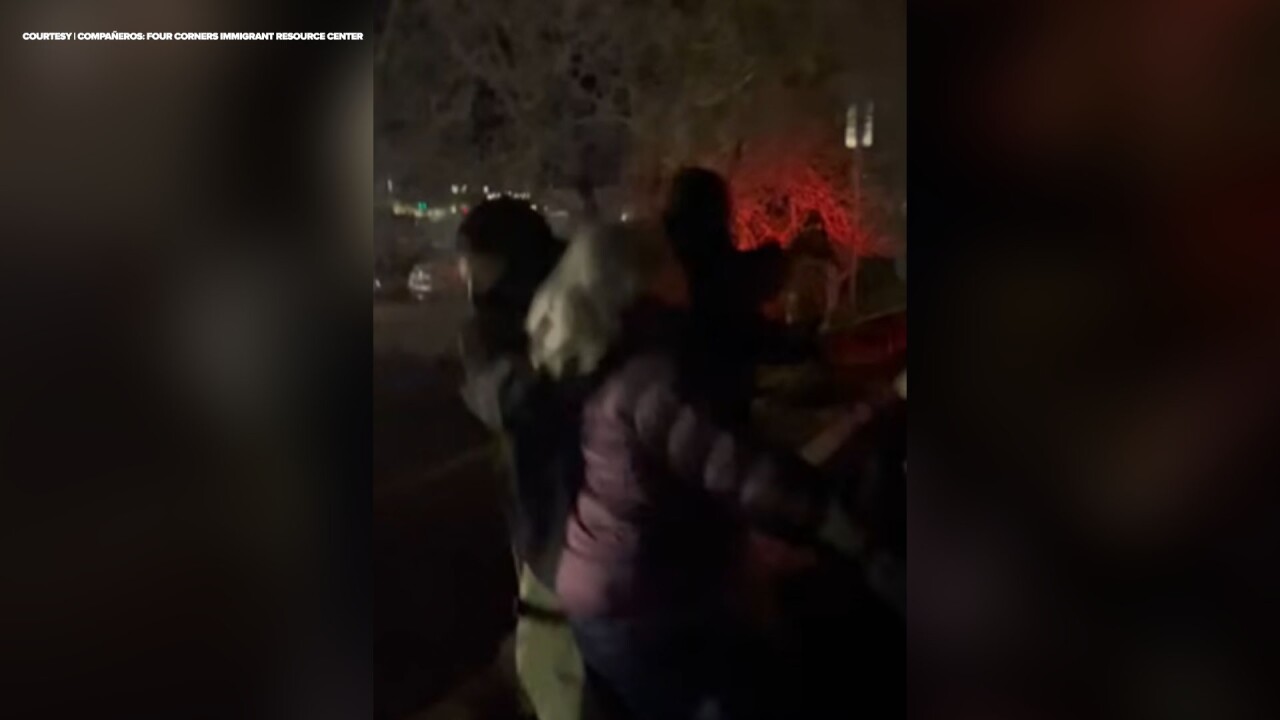
- Video obtained by local media shows what appears to be a federal agent or tactical personnel grabbing a 57-year-old woman, placing her in a chokehold, and throwing her down a grassy slope outside the facility. (Denver Westword)
- The incident provoked immediate pushback from local officials: Brice Current, Chief of the Durango Police Department, formally requested that the Colorado Bureau of Investigation (CBI) launch a probe into possible state criminal law violations. (Denver 7 Colorado News (KMGH))
Why the Police Chief Stepped In
Chief Current’s intervention is significant for several reasons:
- It signals a rare moment of friction between local police leadership and federal immigration enforcement authorities—particularly in a state that has professed a protective stance toward immigrants.
- By requesting the CBI investigation, the chief is asserting that even when federal agents operate locally, state law and oversight can—and should—apply.
- It reflects growing concern that aggressive or opaque enforcement actions may undermine public trust in law-enforcement partnerships and local policing efforts in communities with high immigrant populations.
Broader Implications
This incident touches several broader themes:
- Use of force & “protest‐space” boundaries: The visuals of a protester being physically thrown to the ground raise questions about how federal agents engage demonstrators, especially when the protest targets immigration operations rather than violent criminals.
- Federal‐local tensions: Local law‐enforcement agencies often rely on cooperation with federal partners. But when federal actions spark community backlash, local officials may face pressure to distance themselves or seek transparency.
- Community trust & immigration enforcement: In regions with large immigrant populations or asylum seekers, aggressive federal raids or enforcement actions can chill community cooperation with local police—potentially undermining public-safety goals.
- Legal jurisdiction & oversight: The invocation of a state bureau (CBI) to investigate a federal enforcement action highlights ambiguity in oversight: Which laws apply, and who holds federal actors to account at the local/state level?
What Happens Next
- The CBI will investigate whether state criminal laws were violated during the altercation and then refer findings to the 6th Judicial District Attorney. (coloradonewsline.com)
- Local and state officials are likely to evaluate whether new policies or memoranda of understanding are needed between local police departments and ICE/HSI (Homeland Security Investigations) operations, especially in communities vulnerable to immigration-enforcement escalation.
- Community-advocacy groups will monitor how the detained father and children’s case proceeds, and whether subsequent federal actions in the region will adapt in response to the public backlash.
- The incident may spark legislative or oversight inquiries about federal agencies’ accountability when operating in states that consider themselves sanctuary jurisdictions or have protective immigration laws.
Bottom Line
The altercation outside ICE’s Durango facility and the resulting protester confrontation have become more than a momentary spectacle. With local law-enforcement stepping into the conflict, the incident is shaping into a test of how federal immigration enforcement is balanced with civil-rights protections and state oversight in vulnerable communities. The outcome may influence how such operations are conducted in Colorado — and potentially beyond.


