


Editor: Sudhir Choudhary
Date: March 28, 2026
Landmark Exhibition Brings Two Powerful Works Together
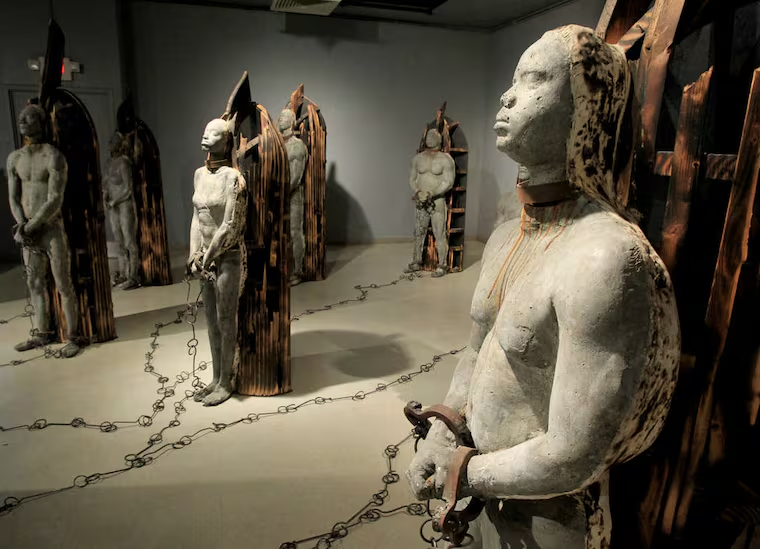
A major art exhibition has brought a contemporary African artwork—widely referred to as the “African Guernica”—into dialogue with Guernica, the iconic anti-war masterpiece by Pablo Picasso.
The exhibition, hosted at Museo Reina Sofía, places the two works side by side, creating a visual and historical conversation on violence, oppression, and resistance.
A Contemporary Response to Historical Atrocity
The African work—produced by a collective of contemporary artists—addresses themes of colonial violence, systemic racism, and political repression. Curators describe it as a modern reinterpretation of the emotional intensity and symbolic language found in Picasso’s original painting.
While Picasso’s Guernica depicts the bombing of the Spanish town during the Spanish Civil War, the African counterpart reflects the enduring impact of colonial rule and postcolonial struggles across the continent.
Curators emphasized that the pairing is intended to highlight parallels between historical and contemporary forms of violence, rather than equate specific events.
Artistic Dialogue Across Continents

By presenting the two works together, the exhibition aims to foster cross-cultural dialogue about the universal consequences of war and oppression.
Art historians note that Guernica, completed in 1937, has long been regarded as one of the most powerful artistic statements against war. The inclusion of the African work expands this narrative, introducing perspectives rooted in African historical experiences.
The exhibition also explores how visual language—such as distorted figures, monochromatic palettes, and symbolic imagery—can convey trauma and resistance across different cultural contexts.
Public and Critical Reception
Early reactions from visitors and critics have been largely positive, with many highlighting the emotional impact of viewing the two works together.
Museum officials reported strong attendance, indicating significant public interest in exhibitions that address political and historical themes through art.
However, some critics have raised questions about interpretation and framing, emphasizing the importance of contextual accuracy when presenting works that deal with distinct historical experiences.
Broader Cultural Significance
The exhibition arrives at a time of renewed global focus on issues of historical injustice, including colonial legacies and systemic inequality. Cultural institutions have increasingly sought to address these themes through exhibitions that combine historical and contemporary perspectives.
The Museo Reina Sofía stated that the exhibition is part of a broader effort to engage audiences in critical discussions about history, memory, and representation.
Conclusion
The pairing of the African “Guernica” with Picasso’s original masterpiece represents a significant moment in contemporary art discourse. By bridging historical and modern perspectives, the exhibition invites viewers to reflect on the enduring impact of violence and the role of art in confronting it.
As audiences continue to engage with the exhibition, it stands as a reminder of the power of visual storytelling in shaping global conversations about justice and human rights.
Sources
Reuters, The Guardian, Museo Reina Sofía, Art Review Publications
Tags
Guernica, Pablo Picasso, African Art, Exhibition, Museo Reina Sofía, Colonialism, Art News
News by The Vagabond News.




Leave a Reply