

Editor: Sudhir Choudhary
Date: March 10, 2026
Federal Legal Opinion Supports Presidential Authority Over Pipeline Approval
WASHINGTON — The United States Department of Justice has issued a legal opinion stating that President Donald Trump has the authority to override objections from the state of California and approve construction of a proposed interstate oil pipeline, according to federal officials familiar with the matter.
The opinion, released by the Justice Department’s Office of Legal Counsel, addresses the legal conflict between federal authority over energy infrastructure and California’s environmental regulatory powers. Federal officials said the interpretation clarifies that the president can authorize the project under federal law when it is deemed to serve national energy and infrastructure interests.
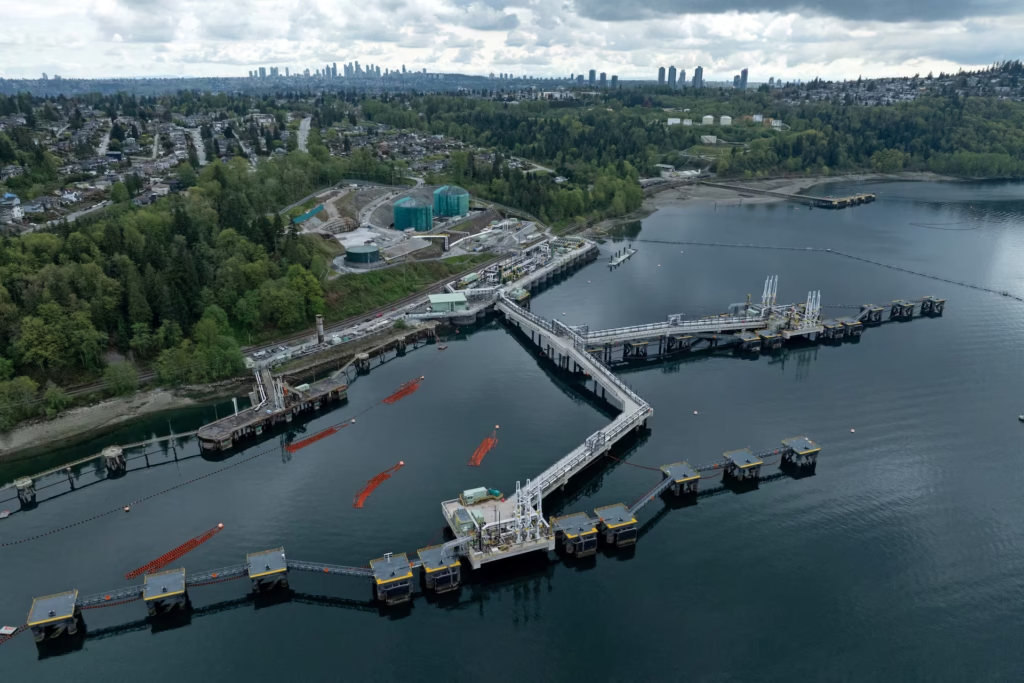
The proposed pipeline, which would transport crude oil through parts of California to refining and export facilities, has been the subject of years of legal disputes between federal regulators, state authorities, environmental groups, and the energy industry.
Legal Basis for Federal Authority

Justice Department lawyers concluded that federal law grants the executive branch significant authority to approve interstate energy infrastructure, particularly when projects cross state boundaries or involve national energy supply.
According to the legal interpretation, federal statutes governing energy transportation and interstate commerce may preempt state-level regulatory decisions if they conflict with national policy priorities. The opinion states that the president can authorize such projects even if state agencies decline permits related to environmental reviews or coastal management requirements.
The legal reasoning draws partly on the U.S. Constitution’s Commerce Clause, which gives the federal government power to regulate interstate commerce. Justice Department officials argued that pipelines carrying oil across state lines fall within that jurisdiction.
The department also referenced past legal precedents in which federal authorities overrode state objections related to infrastructure projects considered vital to national economic or energy policy.
California Officials Oppose Federal Intervention
California state officials have previously argued that the state maintains authority to enforce environmental protections and coastal regulations that apply to energy projects within its borders.
State regulators have repeatedly blocked or delayed pipeline-related permits citing environmental concerns, including potential impacts on marine ecosystems, groundwater safety, and wildfire risks in drought-prone areas.
Officials from the California Coastal Commission and the state’s environmental agencies have stated in earlier proceedings that the project must comply with California’s environmental laws regardless of federal approval.
Environmental organizations have also challenged the pipeline proposal in court, warning that expanded oil transport infrastructure could increase greenhouse gas emissions and threaten sensitive ecosystems along the California coastline.
Broader Conflict Between Federal and State Authority
The Justice Department’s opinion is part of a broader legal struggle between the federal government and several states over control of energy and environmental policy.
During President Donald Trump’s second administration, federal agencies have sought to accelerate approval of major infrastructure projects, including oil and natural gas pipelines, arguing that such developments strengthen national energy independence and economic growth.
At the same time, states such as California have attempted to use environmental permitting powers to limit or delay fossil fuel projects within their jurisdiction.
Legal experts note that disputes over pipeline approvals frequently reach federal courts, where judges must weigh federal energy policy against state regulatory authority.
Potential Legal Challenges Ahead
Legal analysts say the Justice Department’s opinion could trigger additional lawsuits if federal officials move forward with the pipeline approval despite California’s opposition.
Environmental advocacy groups have previously indicated they would challenge any federal override in court, arguing that state environmental laws and coastal protections cannot be bypassed.
Energy industry representatives, however, welcomed the legal clarification, stating that prolonged regulatory conflicts have delayed critical infrastructure needed to transport domestic oil supplies.
The final outcome of the dispute may ultimately depend on rulings from federal courts or the United States Supreme Court, where similar federal–state conflicts over energy infrastructure have been litigated in the past.
For now, the Justice Department’s interpretation provides legal support for the Trump administration’s position that the president can authorize the pipeline even without California’s consent.
Sources:
U.S. Department of Justice Office of Legal Counsel; Reuters; Associated Press; U.S. Energy regulatory filings; California Coastal Commission statements.
Tags: President Donald Trump, US Justice Department, California, Oil Pipeline, Energy Policy, Federal vs State Authority
News by The Vagabond News


